18 July 1970: Anthony Phillips Plays His Final Show with Genesis

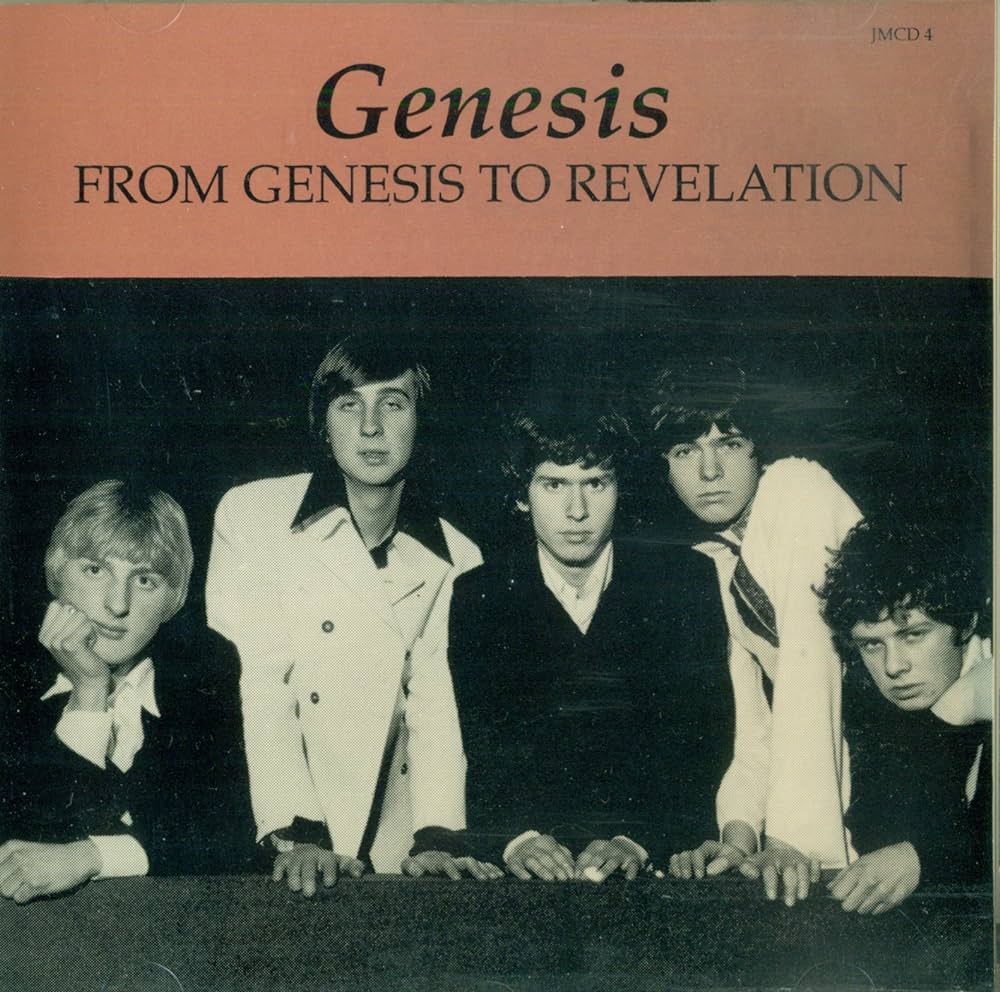
Cover for one of the various editions of 'From Genesis to Revelation'

On 18 July 1970, Genesis performed their final concert with founding guitarist Anthony Phillips at Haywards Heath. His departure would prove to be one of the most significant turning points in the band’s history.

From Charterhouse to Genesis

Anthony Phillips arrived at Charterhouse School in Surrey in April 1965. A talented young guitarist, he soon formed a band called Anon with fellow pupils Richard Macphail, Rivers Jobe, Rob Tyrrell and Mike Rutherford. The group played songs by The Beatles, The Rolling Stones and other popular acts of the day, performing mainly at parties and school events.

It was Anthony who first introduced original material into the band’s repertoire. One of his earliest compositions, Pennsylvania Flickhouse, was recorded during a short session at Tony Pike’s studio in Putney. Richard Macphail later recalled the band’s surprise at how long recording even a single song could take.

‘We piled all the gear in Ant’s mother’s Mercedes and got on a bus and I thought ‘An hour, on my God, what are we gonna do with a whole hour? Each song’s three minutes long, that means we’re gonna get about nine songs done.’ We just got one done and we had huge rails with Mr Pike because everything was of course too loud and he said ‘You’re gonna ruin my equipment!’, all that classic stuff that went on in those days in recording studios.’1

Anon eventually disbanded in late 1966, but Anthony and Mike Rutherford continued writing music together. Looking for a keyboard player, they approached fellow Charterhouse student Tony Banks. Tony agreed to participate on the condition that his friend Peter Gabriel could also contribute a song and provide vocals. Before long, former Garden Wall drummer Chris Stewart joined the project.

The foundations of Genesis had been laid.

The Heart of Early Genesis

After securing the support of producer Jonathan King, the band recorded a series of singles and their debut album, From Genesis to Revelation (1969). Although King believed orchestral arrangements would make the material more commercially appealing, the band were frustrated when strings were added without their knowledge. Anthony was reportedly the most outspoken in expressing his displeasure.

By 1969, the members of Genesis faced an important decision. Their parents expected them to continue their education, but Anthony and Mike had become determined to pursue music professionally. Peter and Tony soon shared that ambition, and by the end of the year Genesis had committed themselves fully to life as a working band.

During this period, Anthony was one of the group’s key creative forces. His twelve-string guitar work and pastoral songwriting style would become defining elements of early Genesis, particularly on Trespass.

The Burden of Life on the Road

While Anthony loved writing and recording music, he struggled with touring. ‘Yet, something was lacking‘, it is said in the press kit of Ant’s first solo album, ‘Phillips, perhaps because he was younger than the others found that life on the road was getting in the way of his writing.’2

As Genesis spent more time on the road, he became increasingly unhappy with the demands of live performance. The constant travelling, lack of sleep and primitive conditions began to take their toll. The band often slept in their van or on friends’ floors while criss-crossing the country for poorly paid gigs.

We literally pitched up somewhere in the Midlands and we had nowhere to stay’, Ant recalls. ‘Too far to go back and some guy said: ‘Well, I know a guy with a bloody big house in Buxton’ and we stayed on the drafted floor of a bloody big house in Buxton.3

At the same time, Anthony began suffering from severe stage fright.

He later recalled: ‘I was in Watford Tech, I remember playing the opening thing of ‘Let Us Now Make Love’ and I looked at the guitar and I thought ‘I haven’t got a clue what comes next’ and then I saw myself playing, but it was really scary.’4 Richard Macphail remembered performances where Anthony appeared paralysed by anxiety.5

What initially seemed like a temporary problem gradually became more serious. After battling these feelings for several months, Anthony’s health deteriorated further when he contracted bronchial pneumonia. Doctors advised him to leave the band.
Leaving Genesis

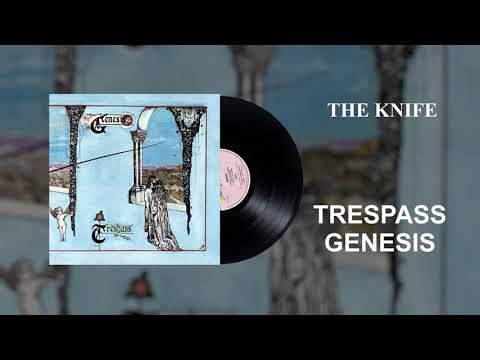
In June 1970, Genesis recorded Trespass, their second album and the record that many fans regard as the true beginning of the classic Genesis sound.

Anthony thoroughly enjoyed the studio sessions, but once recording was complete, the band immediately returned to touring. Before long, he realised he could no longer continue.

Mike Rutherford still remembers the moment Anthony broke the news.

After a soundcheck at Richmond Rugby Ground, Anthony and Richard Macphail took him aside. As daylight faded, Anthony explained that he wanted to leave Genesis.

‘I remember driving out with with Richard Macphail who said ‘Can we have a word with you?”, Mike Rutherford remembers. ‘To the pitch at Richmond rugby ground after a soundcheck. Light was falling, it was a weird atmosphere and Ant said he wanted to leave. It was a huge shock to me.’6

Anthony’s final performance took place on 18 July 1970 at Haywards Heath.

For the remaining members, the departure felt catastrophic.

‘I thought it was the end of the group,’ Tony Banks admitted years later. ‘He was vital to its formation and in many ways he was the strongest member. We felt that whatever was special about us was a combination of the four of us being together in the same room so I assumed that when he left, that was it.’7

Mike Rutherford shared that sentiment:

Losing Ant ‘was the closest we came to busting up. For some reason we felt so close that if one left, we thought we couldn’t carry on. Of all the changes we’ve been through, surviving Ant leaving was the hardest.’8

Given those reactions, it is fair to say that Anthony Phillips’s departure represented the greatest crisis Genesis ever faced. Unlike Peter Gabriel’s departure in 1975, the band had not yet established itself commercially or artistically. In 1970, there was every possibility that Genesis might simply cease to exist.

Life After Genesis

Fortunately, the band decided to continue.

Anthony’s influence remained deeply embedded in Genesis’s music. The opening twelve-string section of The Musical Box, one of the centrepieces of Nursery Cryme (1971), developed from an earlier instrumental piece that he had written with Mike Rutherford.

After leaving the group, Anthony largely withdrew from the music industry for a time. He immersed himself in studying composition, orchestration, classical guitar and piano, broadening his musical horizons far beyond progressive rock.

In 1977, he released his acclaimed debut solo album, The Geese & The Ghost, which featured contributions from several former Genesis bandmates.

More than fifty years after leaving Genesis, Anthony Phillips remains an active and respected musician. His contribution to the band’s formative years cannot be overstated. Without his songwriting, musicianship and artistic vision, Genesis might never have become the band we know today.

His final concert at Haywards Heath marked the end of one chapter, but, in many ways, it ensured the beginning of another.


Title photo: Cover of one of the various editions of From Genesis to Revelation

Footnotes

  1. RICHARD MACPHAIL INTERVIEW Revised : GENESIS early years ↩︎
  2. The Geese and The Ghost Press Kit. Passport Records. 1977. pp. 2–3. ↩︎
  3. ANTHONY PHILLIPS UNFILTERED: GENESIS C0-FOUNDER IN CONVERSATION ↩︎
  4. ANTHONY PHILLIPS UNFILTERED: GENESIS C0-FOUNDER IN CONVERSATION ↩︎
  5. RICHARD MACPHAIL INTERVIEW Revised : GENESIS early years. In fact, Anthony Phillips has not played live to this day. ↩︎
  6. MIKE RUTHERFORD UNFILTERED: GENESIS GUITARIST/COMPOSER IN CONVERSATION. Now Revised ↩︎
  7. Bowler, Dave; Dray, Bryan, Genesis. A biography. (London: Sidgwick & Jackson, 1992), p. 35. ↩︎
  8. Ibid. ↩︎

How Phil Collins Joined Genesis

On 4 August 1970, Phil Collins officially became the drummer for Genesis. Here’s the story of how he landed the gig, and how it all began with a swim.

‘Looking for someone…’

By the summer of 1970, Genesis had just suffered what they later described as the biggest loss in their career: guitarist and founding member Anthony Phillips had decided to leave the band. Though the music on Trespass was complete, Ant’s struggle with stage fright made it impossible for him to continue performing. With his departure, Genesis (then a quartet) decided it was time to look for a new guitarist and, crucially, a new drummer.

Up until that point, they had gone through three different drummers. So, they placed an anonymous ad in Melody Maker, the go-to magazine for musicians in the UK:

‘TONY STRATTON SMITH is looking for 12-STRING GUITARIST who can also play lead; plus DRUMMER sensitive to acoustic music.’

One aspiring young drummer in London happened to see it: Phil Collins.

Answering the call

Phil had previously played in a band called Flaming Youth (originally named Hickory) and released one album with them. But the band never took off, rarely performed live, and left Phil frustrated and eager for something new. Determined to pursue a career as a professional drummer, he began scanning Melody Maker for new opportunities.

He recognised the name of the band’s manager, Tony Stratton-Smith, from his earlier music ventures and knew he could often be found at the bar in London’s Marquee Club. So Phil turned up and asked directly if he could audition for the band. Stratton-Smith responded that the band insisted on auditions for everyone. The band, he revealed, was Genesis. Phil had seen their name in the back pages of Melody Maker listings, but didn’t know much about their music.

At the time, Genesis was a trio: Tony Banks on keyboards, Peter Gabriel on vocals, and Mike Rutherford on guitar and bass. Phil recalls calling them and speaking with Peter Gabriel:

‘He said ‘Yes, uhm, come down to my parents’ house in Chobham.”

Peter was intrigued when Phil mentioned he had played with George Harrison. (Phil would later admit that all he had done was play percussion on one of George’s sessions, but the name-drop got his foot in the door.)

The audition (and the swimming pool)

Phil and his friend, guitarist Ronnie Caryl, drove out to the Gabriels’ countryside home near Woking on a hot summer day. The house had a pool and was surrounded by fields. Ronnie was hoping to join the band too.

Phil remembers seeing Mike Rutherford in what looked like a crushed velvet dressing gown and slippers. (Mike insists it was just a swimsuit and robe – they were by the pool, after all.) Tony Banks barely spoke and struck Phil as a ‘tortured artist.’ Peter Gabriel seemed eccentric.

They’d arrived early, and there were still a few drummers ahead of Phil. While waiting, they were invited to take a swim.

‘Being there early and having two or three drummers ahead of me, I didn’t know what the conversation was, what they were saying to each other, but I could hear the music. The same piece of music being played two or three times and the same piece of music being played with the next guy two or three times. So by the time I came up to play, I kind of felt I knew what I was doing.’

The band played pieces that showed the different styles Genesis was experimenting with: delicate passages, heavier sections, and more experimental parts. Phil listened to the Trespass album in the living room and was struck by the harmonies that reminded him of Crosby, Stills & Nash. He later said he would’ve joined them even if he hadn’t liked the music: he simply needed a job.

Thanks to the sneak preview while in the pool, Phil nailed the audition.

Peter Gabriel later said:

‘Just the way he sat down on the stool, I knew he was going to be good. Some people have this sort of confidence about what they do.’

After they left, Ronnie thought Phil had failed the audition but that he had done great. As we know, it turned out the other way around. Phil got the job. Ronnie didn’t, but he did end up playing in Phil’s solo band years later.

Fitting into the band

Phil, then just 19, joined Genesis in August 1970. The band took a short holiday before getting back together to rehearse in a space called Farnham Maltings, which Mike’s father helped them rent. Over six weeks, they began working on what would become Nursery Cryme.

Phil immediately noticed the cultural gap between him and the others. He was a working-class lad with a grammar and stage school background. The others were Charterhouse-educated public school boys. He recalls seeing Tony Banks and thinking he looked like Beethoven with his long hair.

Peter Gabriel, meanwhile, had a bass drum next to his mic stand, which he would bang on spontaneously, even out of rhythm. This annoyed Phil.

The atmosphere in the band was intense. Tensions ran high, especially between Peter and Tony.

In the middle of a conversation, suddenly someone would get up and slam a guitar on the floor and walk out‘, Phil remembers. ‘I thought ‘What?’ Someone had said something to upset somebody else. Two hours later this person would come back and we’d start playing again. Suddenly there’d be ‘Oh, f*** you’ and somebody else walked out. It was very highly strung.’

Peter Gabriel adds:

‘I would often be at loggerheads with Tony Banks, and Phil would always sit on the fence, he would never want to come into the argument.’

Phil’s different background influenced more than just the sound. It affected the group’s dynamics. He realised early on that his role included defusing arguments with humour, a skill that came naturally from his time at stage school.

Mike Rutherford recalls:

Apart from the humour, he’s got a very laid-back approach. He was very serious about his work, but had a very laid-back approach to life, which I think helped us a little bit.

Phil may have thought he was joining a band that held rehearsals by a pool in the countryside. In reality, he’d just signed up for years of rough touring in a van. But the chemistry was right and the rest is history.

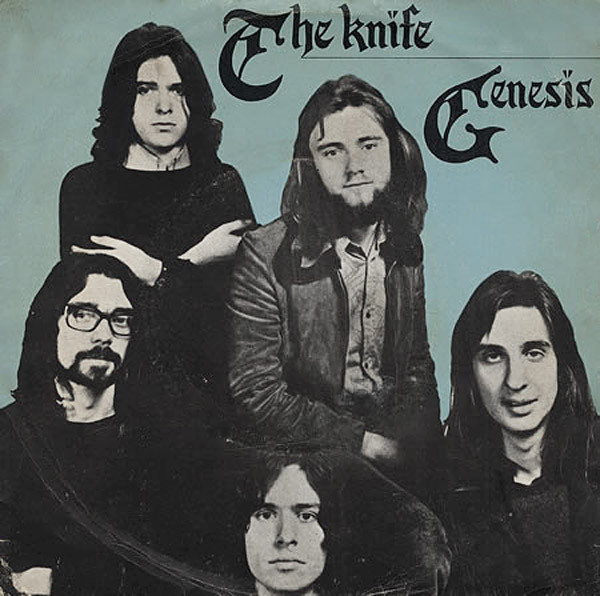
Title photo: Genesis – ‘The Knife’ (single cover).

Sources

Phil Collins – A Life Less Ordinary (documentary, 2002)

Genesis – Sum of the Parts (documentary, 2014)

Philipp Röttgers – Two eras of Genesis? The development of a rock band (book, 2015)

The Silent Sun (1968) – Genesis

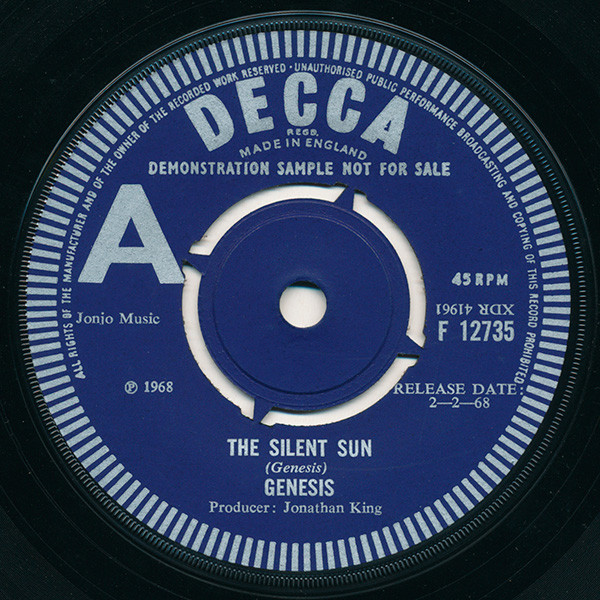
In February 1968, Genesis released their debut single, The Silent Sun, on Decca Records. At just 17 years old, Peter Gabriel was already making his mark. Let’s take a closer look at the band’s very first single!

Genesis at Charterhouse

In 1968, Genesis were still students at Charterhouse School. Tony Banks, Peter Gabriel, Mike Rutherford, and Anthony Phillips had formed the band as a way to escape the constraints of school life. At the time, the group operated as two songwriting pairs: Banks and Gabriel on one side, Phillips and Rutherford on the other.

While still at school, they recorded demos and sent them to Jonathan King, a former Charterhouse student who had found success as a musician and producer (his best-known hit being Everyone’s Gone to the Moon). King was particularly impressed by Peter Gabriel’s voice and signed them to Decca Records, intending to produce a full album. However, when the band presented their next batch of demos, he wasn’t impressed.

A Producer Who Loved The Bee Gees

Jonathan King wanted the band to deliver a potential hit. Knowing he was a fan of The Bee Gees, Peter and Tony deliberately wrote a song in their style—The Silent Sun.

‘I tried my best Robin Gibb impersonation,’ Peter later joked.1

King loved it and made it their debut single, later including it on the band’s first album, From Genesis to Revelation.

Musically, The Silent Sun blends folk and pop, with Tony Banks’ piano already playing a central role. The song primarily highlights Peter’s vocals, with orchestral strings added later by King in the studio. It’s also one of the rare official Genesis recordings to feature their original drummer, Chris Stewart.

‘We had been drilled by Jonathan King to write short pop songs, which I resisted,’ Anthony Phillips recalled. ‘I didn’t like The Silent Sun at all.’ He later reflected that it was probably for the best that the song wasn’t a hit: ‘If it had been successful, the band would never have developed its proper style.’2

Tony Banks, however, believed it had the potential to be a great hit. For Peter Gabriel, seeing the name Genesis in Record Mirror was a career-defining moment, while Mike Rutherford fondly remembers the thrill of hearing The Silent Sun on the radio for the first time in Anthony Phillips’ kitchen.

Reviews and Reception

Upon release, the Decca catalogue described The Silent Sun as ‘quietly attractive.’’.3 New Musical Express praised its ‘beautiful flowing arrangement of violins and cellos,’ though they speculated it ‘might be a bit too complex for the average fan.’4

A Single That Failed but a Band That Flourished

Despite their enthusiasm, The Silent Sun failed to chart. The accompanying album, From Genesis to Revelation, was also a commercial failure. Eventually, Genesis parted ways with Jonathan King, allowing them to explore a more adventurous and distinctive musical direction.

As the band gained fame, King repeatedly re-released these early recordings in various formats, capitalizing on Genesis’ later success. But for Genesis themselves, The Silent Sun remains a fascinating footnote in their history—their first step on the road to greatness.

Sources

ANTHONY PHILLIPS FULL UNCUT INTERVIEW .PT 1:FORMING GENESIS/ EARLY RECORDING/DISCOVERING THEIR SOUND.

Decca Press release.

GENESIS REUNION 2014: THE THREE. Part ONE. NOW FULL UNCUT VERSION ! + improved audio!

Thompson, Dave, Turn it on again. Peter Gabriel, Phil Collins & Genesis. (San Francisco: Backbeat Books, 2005).

  1. GENESIS REUNION 2014: THE THREE. Part ONE. NOW FULL UNCUT VERSION ! + improved audio! ↩︎
  2. ANTHONY PHILLIPS FULL UNCUT INTERVIEW .PT 1:FORMING GENESIS/ EARLY RECORDING/DISCOVERING THEIR SOUND. ↩︎
  3. Decca Press release. ↩︎
  4. Thompson 2005: 17. ↩︎