On 18 July 1970, Genesis performed their final concert with founding guitarist Anthony Phillips at Haywards Heath. His departure would prove to be one of the most significant turning points in the band’s history.
From Charterhouse to Genesis
Anthony Phillips arrived at Charterhouse School in Surrey in April 1965. A talented young guitarist, he soon formed a band called Anon with fellow pupils Richard Macphail, Rivers Jobe, Rob Tyrrell and Mike Rutherford. The group played songs by The Beatles, The Rolling Stones and other popular acts of the day, performing mainly at parties and school events.
It was Anthony who first introduced original material into the band’s repertoire. One of his earliest compositions, Pennsylvania Flickhouse, was recorded during a short session at Tony Pike’s studio in Putney. Richard Macphail later recalled the band’s surprise at how long recording even a single song could take.
‘We piled all the gear in Ant’s mother’s Mercedes and got on a bus and I thought ‘An hour, on my God, what are we gonna do with a whole hour? Each song’s three minutes long, that means we’re gonna get about nine songs done.’ We just got one done and we had huge rails with Mr Pike because everything was of course too loud and he said ‘You’re gonna ruin my equipment!’, all that classic stuff that went on in those days in recording studios.’1
Anon eventually disbanded in late 1966, but Anthony and Mike Rutherford continued writing music together. Looking for a keyboard player, they approached fellow Charterhouse student Tony Banks. Tony agreed to participate on the condition that his friend Peter Gabriel could also contribute a song and provide vocals. Before long, former Garden Wall drummer Chris Stewart joined the project.
The foundations of Genesis had been laid.
The Heart of Early Genesis
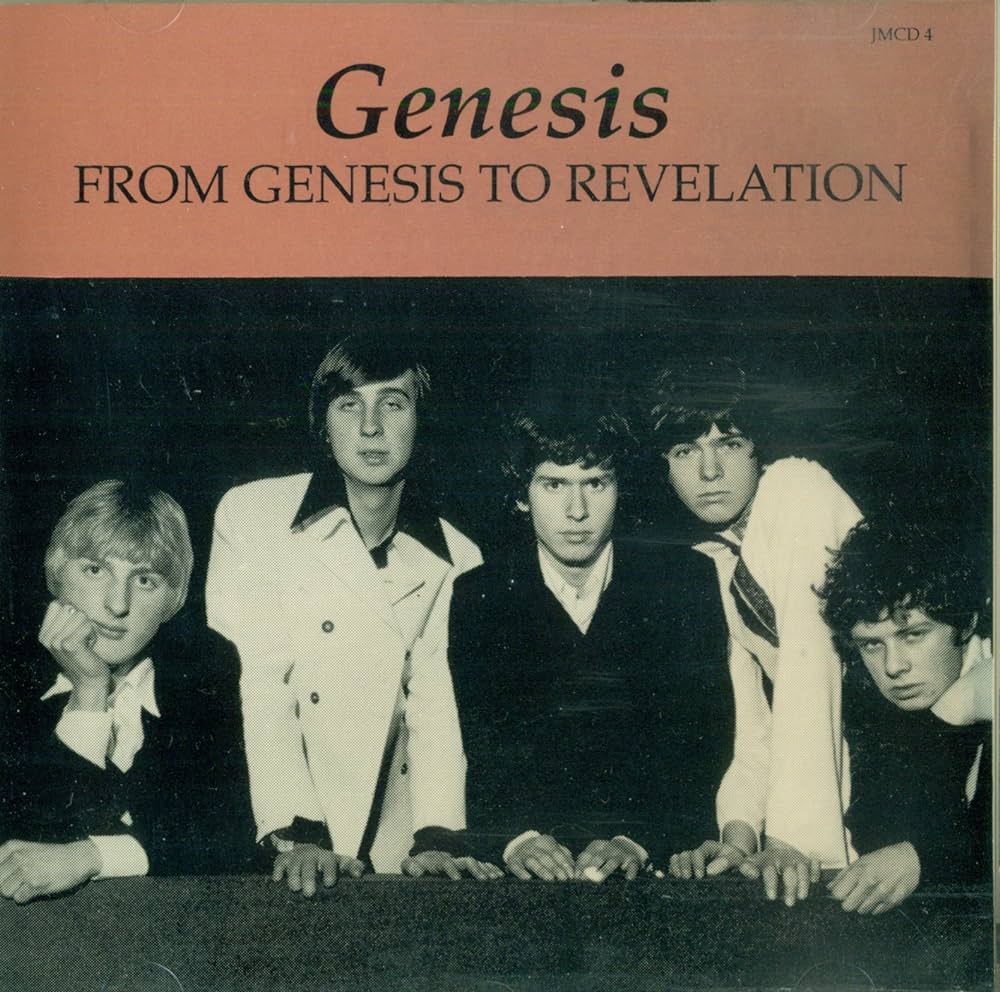
After securing the support of producer Jonathan King, the band recorded a series of singles and their debut album, From Genesis to Revelation (1969). Although King believed orchestral arrangements would make the material more commercially appealing, the band were frustrated when strings were added without their knowledge. Anthony was reportedly the most outspoken in expressing his displeasure.
By 1969, the members of Genesis faced an important decision. Their parents expected them to continue their education, but Anthony and Mike had become determined to pursue music professionally. Peter and Tony soon shared that ambition, and by the end of the year Genesis had committed themselves fully to life as a working band.

During this period, Anthony was one of the group’s key creative forces. His twelve-string guitar work and pastoral songwriting style would become defining elements of early Genesis, particularly on Trespass.
The Burden of Life on the Road
While Anthony loved writing and recording music, he struggled with touring. ‘Yet, something was lacking‘, it is said in the press kit of Ant’s first solo album, ‘Phillips, perhaps because he was younger than the others found that life on the road was getting in the way of his writing.’2
As Genesis spent more time on the road, he became increasingly unhappy with the demands of live performance. The constant travelling, lack of sleep and primitive conditions began to take their toll. The band often slept in their van or on friends’ floors while criss-crossing the country for poorly paid gigs.
‘We literally pitched up somewhere in the Midlands and we had nowhere to stay’, Ant recalls. ‘Too far to go back and some guy said: ‘Well, I know a guy with a bloody big house in Buxton’ and we stayed on the drafted floor of a bloody big house in Buxton.’3
At the same time, Anthony began suffering from severe stage fright.
He later recalled: ‘I was in Watford Tech, I remember playing the opening thing of ‘Let Us Now Make Love’ and I looked at the guitar and I thought ‘I haven’t got a clue what comes next’ and then I saw myself playing, but it was really scary.’4 Richard Macphail remembered performances where Anthony appeared paralysed by anxiety.5
What initially seemed like a temporary problem gradually became more serious. After battling these feelings for several months, Anthony’s health deteriorated further when he contracted bronchial pneumonia. Doctors advised him to leave the band.
Leaving Genesis
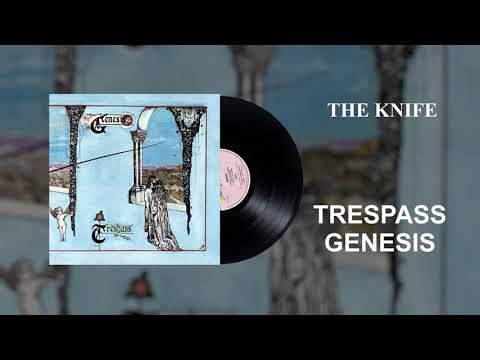
In June 1970, Genesis recorded Trespass, their second album and the record that many fans regard as the true beginning of the classic Genesis sound.
Anthony thoroughly enjoyed the studio sessions, but once recording was complete, the band immediately returned to touring. Before long, he realised he could no longer continue.
Mike Rutherford still remembers the moment Anthony broke the news.
After a soundcheck at Richmond Rugby Ground, Anthony and Richard Macphail took him aside. As daylight faded, Anthony explained that he wanted to leave Genesis.
‘I remember driving out with with Richard Macphail who said ‘Can we have a word with you?”, Mike Rutherford remembers. ‘To the pitch at Richmond rugby ground after a soundcheck. Light was falling, it was a weird atmosphere and Ant said he wanted to leave. It was a huge shock to me.’6
Anthony’s final performance took place on 18 July 1970 at Haywards Heath.
For the remaining members, the departure felt catastrophic.
‘I thought it was the end of the group,’ Tony Banks admitted years later. ‘He was vital to its formation and in many ways he was the strongest member. We felt that whatever was special about us was a combination of the four of us being together in the same room so I assumed that when he left, that was it.’7
Mike Rutherford shared that sentiment:
Losing Ant ‘was the closest we came to busting up. For some reason we felt so close that if one left, we thought we couldn’t carry on. Of all the changes we’ve been through, surviving Ant leaving was the hardest.’8
Given those reactions, it is fair to say that Anthony Phillips’s departure represented the greatest crisis Genesis ever faced. Unlike Peter Gabriel’s departure in 1975, the band had not yet established itself commercially or artistically. In 1970, there was every possibility that Genesis might simply cease to exist.

Life After Genesis
Fortunately, the band decided to continue.
Anthony’s influence remained deeply embedded in Genesis’s music. The opening twelve-string section of The Musical Box, one of the centrepieces of Nursery Cryme (1971), developed from an earlier instrumental piece that he had written with Mike Rutherford.
After leaving the group, Anthony largely withdrew from the music industry for a time. He immersed himself in studying composition, orchestration, classical guitar and piano, broadening his musical horizons far beyond progressive rock.
In 1977, he released his acclaimed debut solo album, The Geese & The Ghost, which featured contributions from several former Genesis bandmates.
More than fifty years after leaving Genesis, Anthony Phillips remains an active and respected musician. His contribution to the band’s formative years cannot be overstated. Without his songwriting, musicianship and artistic vision, Genesis might never have become the band we know today.
His final concert at Haywards Heath marked the end of one chapter, but, in many ways, it ensured the beginning of another.

Title photo: Cover of one of the various editions of From Genesis to Revelation
Footnotes
- RICHARD MACPHAIL INTERVIEW Revised : GENESIS early years ↩︎
- “The Geese and The Ghost Press Kit“. Passport Records. 1977. pp. 2–3. ↩︎
- ANTHONY PHILLIPS UNFILTERED: GENESIS C0-FOUNDER IN CONVERSATION ↩︎
- ANTHONY PHILLIPS UNFILTERED: GENESIS C0-FOUNDER IN CONVERSATION ↩︎
- RICHARD MACPHAIL INTERVIEW Revised : GENESIS early years. In fact, Anthony Phillips has not played live to this day. ↩︎
- MIKE RUTHERFORD UNFILTERED: GENESIS GUITARIST/COMPOSER IN CONVERSATION. Now Revised ↩︎
- Bowler, Dave; Dray, Bryan, Genesis. A biography. (London: Sidgwick & Jackson, 1992), p. 35. ↩︎
- Ibid. ↩︎
They’ve always endeared. There has been what like 23 diff members at some point from 67’ to 22’! All super good albums except maybe the 1st and some
Say the last though I liked the last too! Not too familiar with the 1st.